

Yo, I'm a supplier of small size capacitive touch panels. You might be wondering if these little gadgets are affected by radio frequency interference (RFI). Well, let's dive right into it.
First off, what are small size capacitive touch panels? They're those nifty touch - sensitive screens you find in all sorts of devices. For example, the 10.1 touch screen is commonly used in industrial PCs and CNC machines. The 10.1 Inch Capacitive Touch Screen Car Radio Dvd is a great addition to your car's entertainment system, and the 14 inch touch screen monitor can be used in home automation setups.
Now, let's talk about radio frequency interference. RFI is basically the disturbance that affects an electrical circuit due to either electromagnetic induction or electromagnetic radiation emitted from an external source. It can come from a whole bunch of things like mobile phones, Wi - Fi routers, and even some industrial equipment.
So, do small size capacitive touch panels get affected by RFI? The answer is, it depends. Capacitive touch panels work based on the principle of capacitance. When you touch the screen, it changes the electrical charge at that point, and the panel detects this change to register your touch.
In an ideal world, these panels would work flawlessly all the time. But in the real world, RFI can cause some issues. Radio frequencies can generate electrical noise that might interfere with the normal operation of the touch panel. This interference can lead to false touches being registered, where the panel thinks you're touching it when you're not. Or, it could make the panel less responsive, so you have to press harder or more precisely to get it to work.
One of the factors that determine how much a small size capacitive touch panel is affected by RFI is its design. A well - designed panel will have better shielding and filtering mechanisms. Shielding helps to block out external electromagnetic fields, while filtering can remove the unwanted electrical noise caused by RFI. For instance, some of the touch panels we supply are designed with special shielding materials that can significantly reduce the impact of RFI.
The environment where the touch panel is used also plays a huge role. If it's in a place with a lot of electronic devices, like a modern office or a factory floor, the chances of RFI are much higher. On the other hand, if it's used in a relatively quiet environment, like a simple home setup, the impact of RFI might be minimal.
Another thing to consider is the frequency range of the RFI. Different types of RFI have different frequencies, and touch panels might be more sensitive to certain frequency ranges than others. Some panels are better at handling high - frequency interference, while others are more resistant to low - frequency interference.
To deal with RFI, manufacturers have come up with several solutions. One common approach is to use advanced signal processing algorithms. These algorithms can analyze the electrical signals from the touch panel and distinguish between real touches and false signals caused by RFI. They can then filter out the false signals, ensuring that the panel only responds to actual touches.
We also use high - quality components in our small size capacitive touch panels. The sensors and other electronic parts are carefully selected to have good resistance to RFI. This means that even in a challenging environment, our panels are more likely to work properly.
In addition to the design and component selection, proper installation is also crucial. If the touch panel is not installed correctly, it might be more vulnerable to RFI. For example, the grounding of the panel needs to be done properly to provide a path for the electrical noise to dissipate.
So, as a supplier, we're always working on improving the RFI resistance of our small size capacitive touch panels. We're constantly researching and developing new technologies to make our panels more reliable in all sorts of environments.

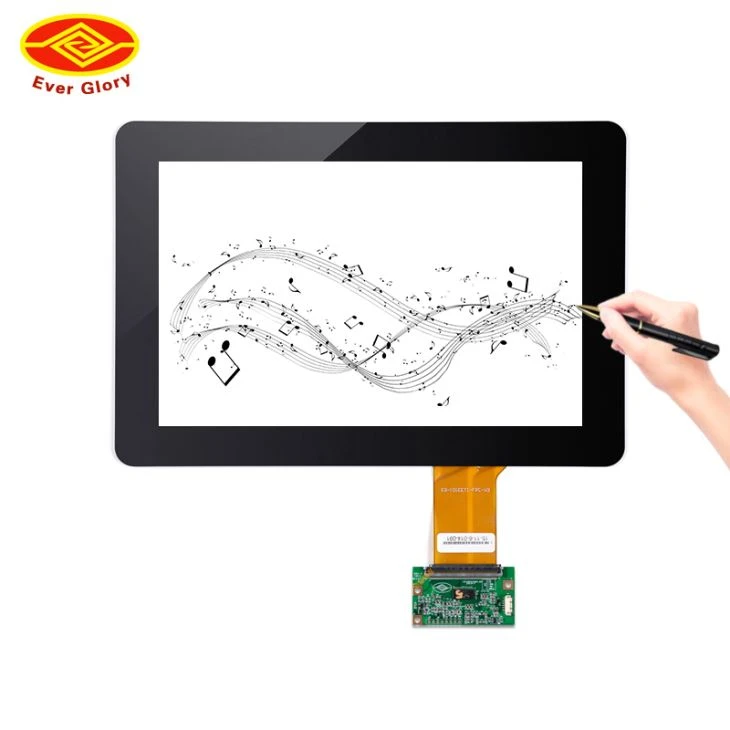
If you're in the market for small size capacitive touch panels, and you're worried about RFI, don't hesitate to reach out. We can provide you with detailed information about how our panels perform in different RFI scenarios. Whether you need a touch panel for an industrial application, a car, or your home, we've got you covered.
We understand that you want a touch panel that works smoothly and accurately, without being disrupted by RFI. That's why we put so much effort into ensuring the quality and performance of our products. So, why not give us a chance to be your go - to supplier for small size capacitive touch panels?
Let's have a chat about your specific needs, and we can find the perfect touch panel solution for you. We're here to help you make the most of your devices with our high - quality, RFI - resistant touch panels.
References:
- "Electromagnetic Compatibility Engineering" by Henry W. Ott
- "Capacitive Sensing: Theory, Design, and Applications" by Charles H. Tietze