

Understanding AR, AG, and AF Glass for Touchscreens
Introduction
When you pick a touchscreen, understanding 'AR vs AG vs AF Glass: Key Differences and Applications' is crucial. AR glass enhances image brightness and reduces reflections, making it ideal for high-definition displays. AG glass minimizes glare, allowing for better visibility in sunlight, which is essential for outdoor applications. AF glass is designed to keep the screen clean by preventing fingerprints, ensuring a smooth user experience. Each type of glass enhances screen usability in various environments, and many businesses utilize these glass types.
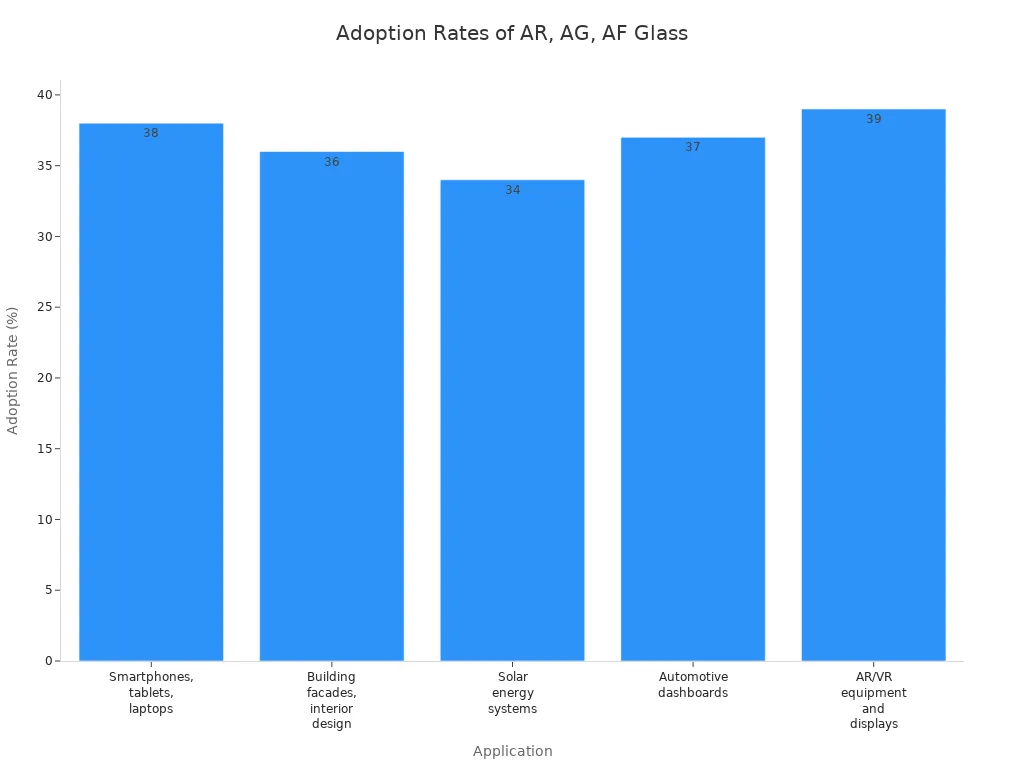
Bar chart comparing adoption rates of AR, AG, and AF glass across five touchscreen device applications
If you want to learn about AR, AG, and AF Glass, understanding the differences is key to selecting the best option. The right glass not only improves screen performance but also enhances user convenience.
Key Takeaways
- AR glass makes screens clearer. It lets almost all light through. This helps high-definition screens look good in bright places.
- AG glass cuts down glare and reflections. It works well outside. You can see the screen better in sunlight.
- AF glass stops fingerprints and smudges. It keeps screens clean. This is important for devices you touch a lot.
- Picking the right glass for your needs helps your touchscreen work better. It also helps your device last longer.
- Using more than one glass type, like AR+AF or AG+AF, gives you clearer screens. It also lowers glare and makes cleaning easier. This helps your device work its best.
Overview of AR, AG, and AF Glass

AR Glass Basics (Anti-Reflective)
AR glass is used in many high-definition screens. AR stands for anti-reflective glass. Makers put a special coating on the glass. They use vacuum evaporation or magnetron sputtering. This coating lets almost all light pass through. Sometimes, it lets up to 99% of light through. The glass reflects less than 1% of light. This makes the screen look clear and bright. AR glass can last as long as 25 years. You notice the difference when you compare AR, AG, and AF glass. AR glass is best when you want sharp images and little reflection.
Tip: AR glass works well in bright places or where you need clear screens.
AG Glass Basics (Anti-Glare)
AG glass means anti-glare glass. You see AG glass on devices used outside or in bright rooms. Makers spray tiny silica particles or use acid to change the glass. This makes the surface matte and spreads out the light. AG glass reflects infrared rays and lets more than 90% of light through. You see less glare and can read the screen in sunlight. AG glass helps you use devices outside without trouble.
AG glass is used in ATMs, POS machines, and outdoor ads.
AF Glass Basics (Anti-Fingerprint)
AF glass stands for anti-fingerprint glass. When you touch AF glass, it stays clean. The glass has a thin nano-chemical coating. This coating is about 12-20nm thick. It makes the glass very hydrophobic. Water forms drops with angles over 110°. The glass does not hold sweat or oil. Fingerprints do not stick to the surface. AF glass passes hard tests, like the 7H pencil test. It feels smooth when you touch it. You can wipe the screen easily and keep it looking new.
Comparison Table
| Type | Key Features | Production Process | Durability |
|---|---|---|---|
| AR | 99% light transmittance, <1% reflection | Vacuum evaporation, Magnetron sputtering | Long lifespan (25 years) |
| AG | 90%+ light transmittance, glare reduction | Spray silica, Acid etching | Very tough |
| AF | Hydrophobic, anti-smudge, easy cleaning | Nano coating 12–20nm | Coating may wear off |
Now you know the basics of AR, AG, and AF glass. Each type helps touchscreens in its own way. When you compare AR, AG, and AF glass, you see how each one is good for different uses.
Why Glass Type Matters
Display Quality
You want your screen to look bright and clear. The glass you pick is important. AR glass, AG glass, and AF glass each help in different ways. AR glass lets more light through and cuts down reflections. This gives you sharper pictures and bright colors. AG glass lowers glare, so you can see the screen outside. AF glass keeps the screen clean, so smudges do not block what you see.
Many companies use tough glass like Gorilla Glass. You get these good things:
- Gorilla Glass does not scratch or break easily.
- It keeps the screen clear and colors bright.
- The glass is made stronger, so it does not crack when dropped.
- It works well with coatings that help you see better and stop fingerprints.
When you look at AR, AG, and AF glass, you see how each one changes the screen. Picking the right glass helps your device work its best.
User Experience
You use touchscreens all the time. The glass type changes how it feels to use them. AR glass lets you see clearly, even in bright rooms. AG glass stops glare, so your eyes do not get tired. AF glass makes the screen smooth and easy to wipe clean.
Here is a table that shows how glass types change touch and how clear the screen looks:
|
Glass Type |
Impact on Touch Sensitivity |
Impact on Visual Clarity |
|
Soda-lime |
Moderate |
Good |
|
Low-iron soda-lime |
High |
Excellent |
|
Aluminosilicate glass |
Very High |
Superior |
Additional Benefits:
• Tempered glass does not scratch or break easily, extending durability.
• Special coatings keep away fingerprints and smudges, ensuring clearer visibility.
• Choosing the right glass enhances aesthetics, smoothness, and long-term performance.
AR vs AG vs AF Glass: Key Differences and Applications
When you look at AR, AG, and AF glass, you notice each one is made in a different way. These differences change how your touchscreen looks and feels. They also affect how it works every day. Let's look at the main ideas so you can pick the best glass for you
Surface Technology
AR glass, AG glass, and AF glass each get a special surface treatment. AR glass has a coating that cuts down reflections and makes things clearer. AG glass gets a matte finish by using chemicals or a spray. This finish spreads out light and lowers glare. AF glass has a tiny coating that stops fingerprints and smudges.
Here's a table to show how they are different:
|
Aspect |
AG Glass (Anti-Glare) |
AR Glass (Anti-Reflective) |
AF Glass (Anti-Fingerprint) |
|
Surface Treatment |
Matte finish (etching/spray) |
Optical coating on one or both sides |
Nano coating repelling oil and prints |
|
Main Benefit |
Reduces glare, diffuses light |
Maximizes clarity, reduces reflection |
Prevents smudges, easy to clean |
|
Transmittance |
88%–91% (up to ~93%) |
93%–99% |
High transparency |
|
Durability |
Very strong |
Strong but coating may wear |
Strong but coating may wear |
|
Cleaning |
Scratch resistant, easy to clean |
Requires gentle cleaning |
Very easy to clean |
Tip: AR+AF or AG+AF combinations deliver both clarity and clean usability.
Visual Performance
How the screen looks changes a lot with AR, AG, and AF glass. AR glass gives you the clearest view. It lets almost all light through and stops most reflections. You see sharp pictures and bright colors. AG glass helps you see the screen outside by spreading light and lowering glare. The matte finish makes it easier to read in sunlight. AF glass does not change how the screen looks much, but it keeps the screen clean so smudges do not block your view.
Here's a quick table to compare:
|
Aspect |
AG Glass |
AR Glass |
AF Glass |
|
Glare Reduction |
Excellent |
Good |
Minimal |
|
Reflection Control |
Moderate |
Best |
None |
|
Visual Clarity |
Good outdoors |
Superior indoors |
Stable clarity |
Note: AG glass is most effective outdoors, AR indoors, AF ensures cleanliness.
Durability & Cleaning
How the screen looks changes a lot with AR, AG, and AF glass. AR glass gives you the clearest view. It lets almost all light through and stops most reflections. You see sharp pictures and bright colors. AG glass helps you see the screen outside by spreading light and lowering glare. The matte finish makes it easier to read in sunlight. AF glass does not change how the screen looks much, but it keeps the screen clean so smudges do not block your view.
Here's a quick table to compare:
• AG glass: Extremely robust and easy to maintain.
• AR glass: Strong, requires careful cleaning.
• AF glass: Easiest to maintain, ideal for frequent touch usage.
Applications by Glass Type
You see AR, AG, and AF glass used in different places. Each type works best for certain devices.
|
Glass Type |
Typical Applications |
Examples |
|
AF |
Consumer electronics, kiosks, automotive, industrial equipment |
Smartphones, tablets, smartwatches, POS/ATMs, in-car displays |
|
AR |
High-definition & medical equipment, optical devices |
Professional monitors, TVs, microscopes, surgical displays |
|
AG |
Industrial, outdoor, medical environments |
Factory panels, X-ray machines, ATMs, outdoor signage |
Quick Tests:
• AG: Scatter effect under strong light.
• AR: Clearer than standard glass under display test.
• AF: Water beads, oil pen marks cannot adhere.
Manufacturers often mix coatings like AR+AF or AG+AF. This gives you screens that are clear, glare-free, and easy to clean.
When you look at AR, AG, and AF glass, you see each one has special strengths. Your choice depends on where and how you use your device.
AR Glass in Touchscreens
How It Works
AR glass is used in many new touchscreens. It has thin coatings that change how light moves. These coatings stop unwanted reflections. This means you see less glare on the screen. More light from the display gets through the glass. Pictures look brighter and sharper. In places with strong lights, like hospitals or control rooms, AR glass helps you see better. You get clear details and true colors. This makes your work easier.
Tip: AR glass makes screens clearer and cuts down on reflections.
Benefits
AR glass gives touchscreens many good things. You see better images and your eyes do not get tired. The screen is easy to read, even when it is bright. You can use AR glass for work or fun. Here is a table that shows the main benefits:
|
Benefit |
Description |
|---|---|
|
Contextual Information |
You see data and pictures clearly without blocking your view. |
|
Professional Applications |
Workers use AR glass to read manuals and get help without using their hands. |
|
Entertainment |
You watch good videos and shows anywhere, like movies on the go. |
|
Productivity |
You can use small computers or pocket devices for work anywhere. |
The screen works well for many jobs. AR glass helps you get things done and enjoy videos without glare.
Where It's Used
AR glass is found in many places and devices. Companies use AR glass in touchscreens for different reasons. Here are some common uses:
- Factories: Workers use AR glass to read instructions and see data while working.
- Cars: Brands like BMW and Audi use AR glass in GPS and navigation screens.
- Consumer products: AR glass can make travel better and might replace phones one day.
You see AR glass in fancy monitors, medical tools, and smart gadgets. When you compare AR, AG, and AF glass, AR glass is best for clear screens and good performance. If you want a touchscreen with sharp images and less glare, AR glass is a great pick.
AG Glass in Touchscreens
How It Works
AG glass gets special treatments to cut down glare. This helps you see screens better in bright places. Makers use three main ways to make AG glass:
|
Process Type |
Description |
Benefits |
Limitations |
|---|---|---|---|
|
Chemical Etching |
Hydrofluoric acid changes the glass. It makes the surface matte and less shiny. |
It blurs reflections and lowers glare. You see better in sunlight. |
The texture may not be even. It works best for some uses. |
|
Spraying |
Tiny silicon particles are sprayed on the glass. This gives a soft, spread-out look. |
It is quick to make and can look different. It works well for big batches. |
The texture can change. Sometimes it peels off later. |
|
Coating |
A special anti-glare layer changes how light bounces off. |
It feels smooth and like paper. It cuts glare a lot. |
It does not last long. It is mostly used for mirrors. |
When you look at AG glass next to AR or AF glass, you see AG glass spreads light and stops strong reflections.
Benefits
- AG glass helps you see screens outside or in bright rooms. The matte surface spreads out light. You can read screens even in sunlight. AG glass does not rust or scratch easily, so your device lasts longer.
- AG glass cuts glare and reflections. Screens are easier to see outside.
- The matte finish stops strong reflections and keeps your eyes comfy.
- It does not rust or scratch, so devices stay tough.
- AG glass helps screens work better, which is good for medical and factory use.
- You get strong and steady performance in jobs that need precision.
Tip: AG glass works great for outdoor kiosks, medical tools, and factory controls.
Where It's Used
AG glass is in many touchscreen products you see every day. Stores use AG glass switches to get customers to interact more. Hospitals use AG glass for screens that work with gloves in surgery rooms. Car showrooms use AG glass to let people try screens more often.
- Stores: AG glass switches help customers spend more time and interact.
- Hospitals: Surgery rooms use AG glass screens for better glove touch.
- Cars: Showrooms see more people using screens with AG glass.
AG glass is important when you compare AR, AG, and AF glass. You pick AG glass when you need screens to work well in bright or tough places. AG glass helps touchscreens show clear pictures and work smoothly wherever you use them.
AF Glass in Touchscreens
How It Works
AF glass is also called anti-fingerprint or oleophobic glass. It has a special coating that keeps your screen clean. Makers put a thin layer of fluorosilane on the glass. This layer sticks tightly to the glass and forms a barrier. The barrier has low surface energy. Oils from your fingers do not stick to it. Instead, the oils bead up and roll off. You can wipe away marks with a soft cloth. The smooth finish keeps your screen clear and bright.
- The oleophobic coating pushes away oils and stops fingerprints.
- The surface stays smooth, so stains and smudges do not build up.
- Cleaning the screen is quick and easy.
Tip: AF glass is great if you want a screen that always looks clean and is simple to use.
Benefits
AF glass gives you many good things for your touchscreens. The biggest benefit is a cleaner screen. You see fewer fingerprints and smudges, so your display stays sharp. This makes it easier to read and use your device in any light. AF glass also helps your device last longer because the coating protects against daily wear.
Here are some main benefits:
- Fewer fingerprints and smudges
- Better visibility and easier reading
- Stronger glass for lots of use
- Simple cleaning and care
- Lower cleaning costs over time
|
Benefit |
Description |
|---|---|
|
Cleaner screens |
Less smudges and marks |
|
Better appearance |
Shiny look for your devices |
|
Less cleaning needed |
Saves time and work |
|
Consistent clarity |
Good viewing in all lighting |
Where It's Used
You find AF glass in many devices and places where people use touchscreens a lot. Phones, tablets, and smartwatches use AF glass to keep screens clear. Car makers use it in car screens, so drivers see info easily. Smart home devices and public kiosks also use AF glass for a clean, easy-to-use screen.
- Phones and tablets
- Wearable devices like smartwatches
- Car screens and infotainment systems
- Smart home panels and public touch kiosks
More people want screens that do not get smudgy. When you compare AR glass, AG glass, and AF glass, you see AF glass is best for keeping screens clean and easy to use. This makes it a top pick for devices you touch every day.
Choosing the Right Glass
Environment Factors
Think about where you will use your touchscreen. The place you use it can change how well the glass works. If you use your device outside or in a bright room, AG glass helps. It lowers glare and reflections. This makes screens easier to see in sunlight. AR glass is best for places where you need clear pictures, like hospitals or labs. It cuts down reflections and gives sharp images. AF glass keeps screens clean. This is important in places where many people touch the screen, like public kiosks or smart home panels.
Tip: Glass covers protect your touchscreen from water, dust, and sunlight. This helps your device last longer and work better.
Here is a simple table to help you pick the right glass for your space:
|
Glass Type |
Key Attributes |
Environmental Considerations |
|---|---|---|
|
AG |
Reduces glare and reflections |
Best for outdoor or bright environments |
|
AR |
Enhances visibility |
Ideal for medical devices and precision instruments |
|
AF |
Resists fingerprints and oils |
Great for devices needing a clean appearance |
Device and Usage
Think about how you use your device. Different devices need different glass. Phones and tablets use AF glass because you touch them a lot. This keeps screens free from fingerprints. Outdoor screens, like ATMs or ads, use AG glass. This helps you see the screen even in strong sunlight. Medical devices and fancy monitors use AR glass for the clearest images.
- AG glass: Good for outdoor screens and factory controls.
- AR glass: Best for medical tools and high-definition screens.
- AF glass: Perfect for phones, tablets, and smart home devices.
When you look at AR, AG, and AF glass, you see each one is good for a special job.
Balancing Needs
You want your touchscreen to last, work well, and not cost too much. You need to think about price, how well it works, and how tough it is. Mechanical strength helps your device survive drops and bumps. Environmental strength protects against water and heat. Electrical strength keeps your touchscreen working in different places. Chemical strength stops damage from oils or cleaning sprays.
|
Durability Factor |
Description |
|---|---|
|
Mechanical Resilience |
Handles bumps and drops |
|
Environmental Resistance |
Protects against water and heat |
|
Electrical Robustness |
Works well in different electrical settings |
|
Chemical Compatibility |
Stops damage from oils and cleaning sprays |
You should check how each glass type handles electricity, light, and bumps. Think about what your device needs and how much you want to spend. When you pick AR, AG, or AF glass for your touchscreen, you help your device work better and last longer.
Note: Picking the right glass helps your business and your users get the best results. 😊
Picking the right glass for your touchscreen is important. AR glass helps you see clear images and bright colors. AG glass cuts down glare, so it works well outside. AF glass keeps the screen clean and free from fingerprints. Here are the main features:
|
Coating Type |
Key Features |
Best Use |
|---|---|---|
|
AR Glass |
Very clear, less reflection |
Medical, car screens, displays |
|
AG Glass |
Stops glare, easy to see |
Outside, factories, kiosks |
|
AF Glass |
No fingerprints, easy to wipe |
Phones, tablets, public screens |
Ever Glory has AR, AG, and AF glass you can trust. Their glass is used in factories, hospitals, and outside. Contact them to find the best glass for your needs! 📞 @admin@ydtouch.com
FAQ
What is the main difference between AR glass, AG glass, and AF glass?
You see AR glass reduce reflections, AG glass cut glare, and AF glass keep screens free from fingerprints. Each type improves touchscreens in a unique way.
How do I choose between AR vs AG vs AF glass for my device?
You pick AR glass for clear images, AG glass for outdoor visibility, and AF glass for easy cleaning. Think about where you use your touchscreen most.
Can I combine AR, AG, and AF coatings on one touchscreen?
You can combine coatings. Many devices use AR+AF or AG+AF glass. This gives you better clarity, less glare, and a cleaner screen.
Does AF glass affect touch sensitivity?
You get smooth touch with AF glass. The coating does not change how your finger moves on the screen. You still enjoy fast and accurate response.
How do I know which glass is on my touchscreen?
You can test the glass. AR glass looks clearer under light. AG glass scatters light. AF glass lets water roll off and resists oily marks.